
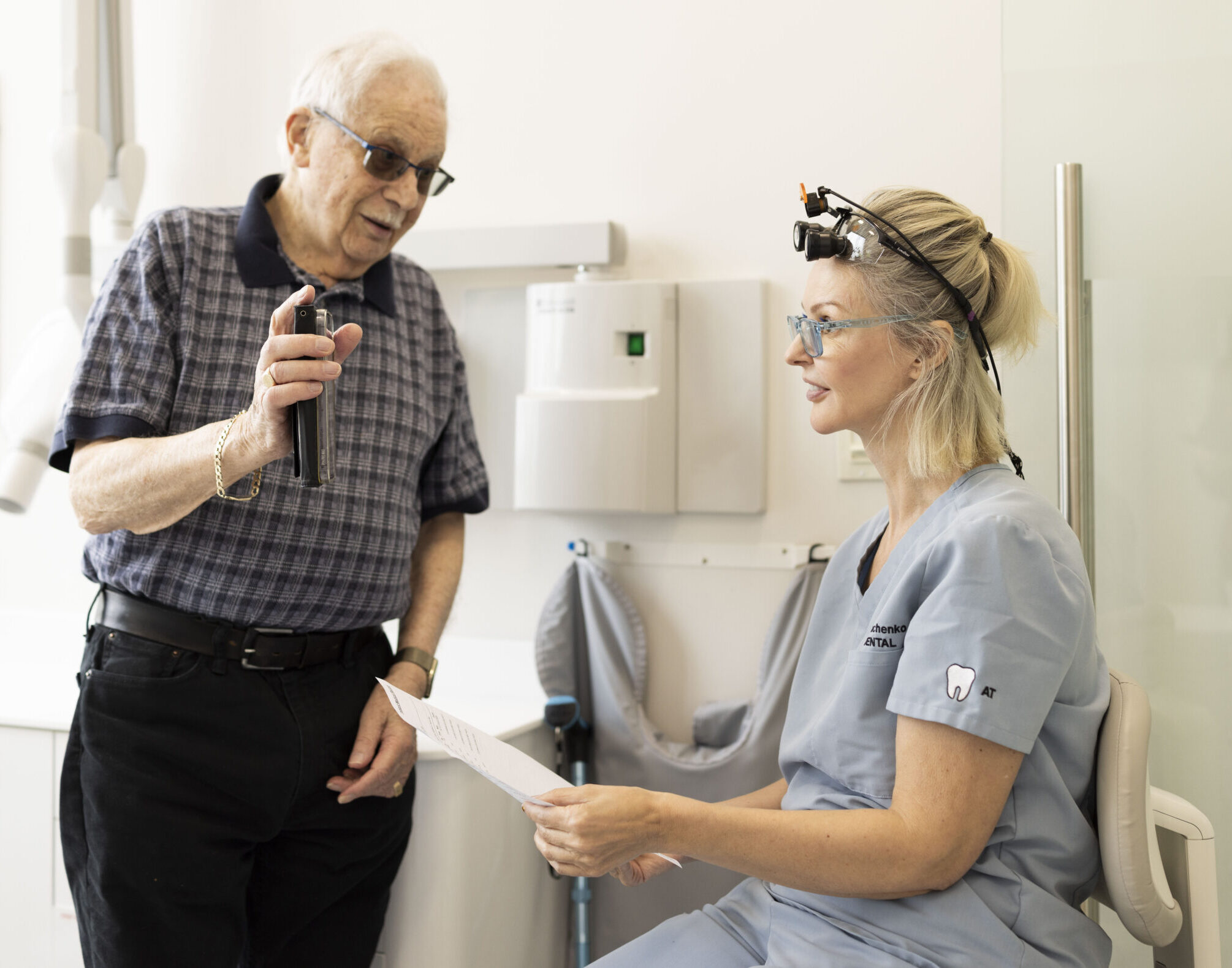
Our previous post put a great emphasis on the common issues in oral health that could arise as we age, particularly as one gets to senior age. While it can seem scary at first, there’s good news, and it’s that there are ways to maintain oral health; even after the age of 65. Keeping a healthy mouth as we age means following good oral hygiene, visiting the dentist regularly, and making some lifestyle changes. Here are some tips for seniors:
Practice Good Oral Hygiene
- Brush Twice a Day: Use a soft toothbrush and fluoride toothpaste to brush your teeth at least twice a day. This helps remove plaque and prevent tooth decay and gum disease.
- Floss Daily: Flossing removes food and plaque from between the teeth and under the gumline where a toothbrush can’t reach.
- Use Mouthwash: An antimicrobial mouthwash can reduce bacteria in the mouth and freshen breath.
Stay Hydrated
Drink plenty of water to keep your mouth moist and maintain saliva production. Avoid sugary and caffeinated drinks that can cause dry mouth and tooth decay.
Maintain a Healthy Diet
Eat a balanced diet with lots of fruits, vegetables, lean proteins, and whole grains. This supports overall health and helps keep teeth and gums strong. Limit sugary and acidic foods and drinks that can damage tooth enamel and cause cavities.
Avoid Tobacco Products
Smoking and using other tobacco products can lead to gum disease, tooth loss, and oral cancer. Quitting smoking can greatly improve oral and overall health.
Regular Dental Check-Ups
Regular dental visits are crucial for keeping your mouth healthy. Dentists can find and treat problems early, do professional cleanings, and give advice on good oral hygiene practices.
Manage Medications
Some medications can cause dry mouth and other dental issues. Talk to your healthcare provider about possible alternatives or ways to manage these side effects.
Use Dental Aids
If you have trouble with manual dexterity, electric toothbrushes and water flossers can be easier to use and more effective for cleaning teeth and gums.
Replace Missing Teeth
If you’ve lost teeth, consider options like dentures, bridges, or implants to restore function and appearance. Make sure dentures fit properly, clean them regularly, and have them checked by a dentist.
Visit Your Dentist Regularly…
We really can’t put enough emphasis just how crucial it is to do so. It’s practically a make-it-or-break-it when it comes to one’s dental health if you’re over the age of 65. Your dentist can detect early signs of tooth decay, gum disease, oral cancer, and other issues that may not be noticeable to the patient. Early detection allows for timely treatment, which can prevent more severe problems down the line.
Professional Cleaning
Professional cleanings remove plaque and tartar buildup that cannot be removed by regular brushing and flossing. This helps prevent cavities and gum disease.
Oral Cancer Screening
Oral cancer screenings are a routine part of dental check-ups for seniors. Early detection of oral cancer can significantly improve treatment outcomes.
Denture Care
For seniors with dentures, regular dental visits ensure that the dentures fit properly and are in good condition. Poorly fitting dentures can cause sores and other issues in the mouth.
Personalized Advice
Dentists can provide personalized advice on oral hygiene practices, diet, and other factors that affect oral health. They can also recommend products that may be beneficial for specific issues like dry mouth or sensitive teeth.